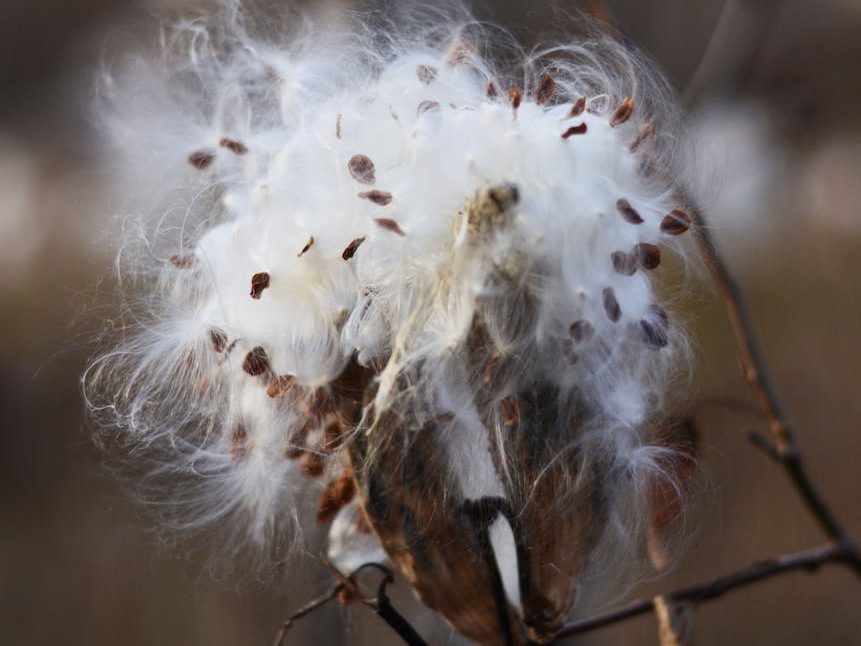
Swamp milkweed is one of those plants that keeps on giving, especially when it comes to its beautiful seed pods. Watching them go from green and tight to brown and bursting open is such a fun part of the season. Not only do the pods add some visual interest to your garden in late summer and early fall, but they also play a crucial role in spreading the plant’s seeds to new spots.
If you’ve ever wondered what happens after those gorgeous blooms have faded, here’s a peek into the life cycle of swamp milkweed’s seeds!
When to harvest
Wait until the pods begin to dry and split open naturally, which usually happens from September to October here in Maryland. This is when the seeds are fully mature and ready to be collected.
If you want to prevent unwanted spreading, tie a mesh bag or organza pouch around the pods before they split. This will catch all the seeds and stop them from flying away in the wind.
How to collect seeds
Once the pods are fully dry and just starting to open, gently break them apart and separate the seeds from the white floss. The floss helps the seeds disperse naturally, so be careful not to make a mess!
Place the seeds in a paper envelope or breathable container to prevent mold. Make sure to store them in a cool, dry place until you’re ready to plant them next season.
Managing seed spread
If you don’t want swamp milkweed spreading all over the place, regularly check for maturing pods and remove them before they split open.
If you end up with extra seeds, don’t just toss them! Consider sharing with other gardeners or local conservation groups, so they can grow in the right spots instead of going to waste.
Harvesting swamp milkweed seeds is a great way to grow more plants while keeping things under control in your garden!
Here are some trustworthy sites where you can learn more about monarchs, milkweed, and conservation efforts:
- Monarch Watch (https://www.monarchwatch.org) – A leading organization focused on monarch conservation, migration tracking, and how to create monarch habitats.
- Xerces Society (https://www.xerces.org) – A nonprofit dedicated to invertebrate conservation, with excellent resources on pollinators and native milkweed species.
- Journey North (https://journeynorth.org/monarchs) – Tracks monarch butterfly migration and provides educational resources for citizen scientists.
- Monarch Joint Venture (https://monarchjointventure.org) – A collaboration of organizations working to protect monarchs and their habitat, offering research-based conservation guidance.
- USDA Plants Database (https://plants.usda.gov/home) – Provides detailed information on native plants, including swamp milkweed (Asclepias incarnata).
- Pollinator Partnership (https://www.pollinator.org) – Offers guidance on supporting pollinators, including monarchs, with planting guides by region.
These sites offer reliable, research-backed information to help you better understand and support monarchs and milkweed conservation efforts.
 Florals by Shann
Leave a comment